15
NEXTINOTECH DIGITAL · SYSTEMS · DATA

Control
Tower.

WMS, TMS, IMS, AMS, IoT, AI: six systems, one single real-time view of your supply chain.

In the field · Nextinotech Digital

The control tower, screen by screen.

A materials transport fleet tracked in real time: position and status of every truck, trips and rotations, fuel, maintenance, planning, driver compliance. Teaching demo, fictitious data.
A teaching demo of a control tower for a materials transport fleet in Morocco: real-time carrier map, status of each vehicle, trip, load, fuel level, 3D maintenance view of parts due for service, then the driver's eco-driving score.
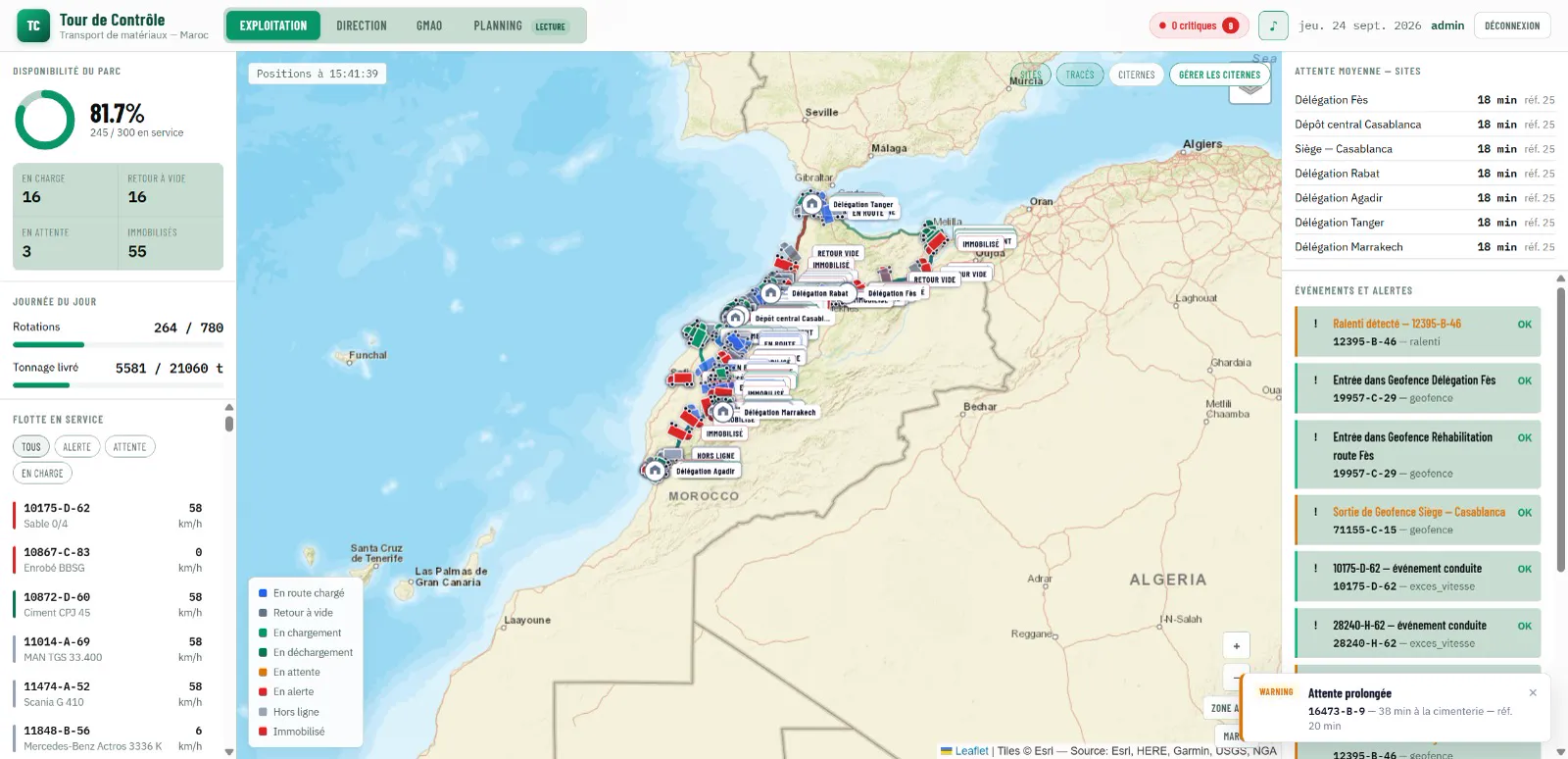
Control tower: map of Morocco with the position and status of each truck (en route, loading, idle), fleet availability and geofencing alerts
Real-time fleet map
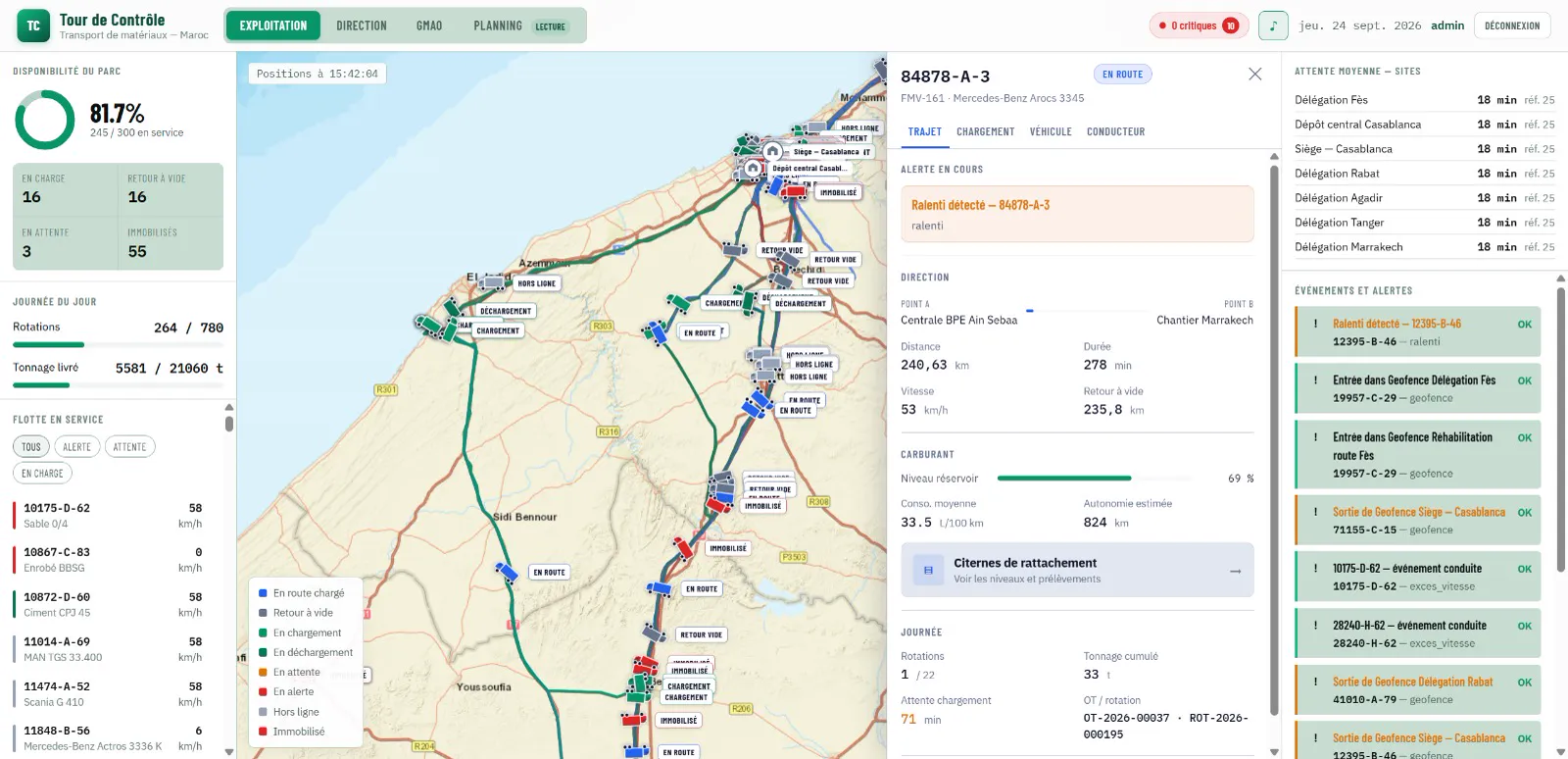
Vehicle sheet in the control tower: idling alert, trip from the concrete plant to the site, distance, duration, fuel level and today's rotations
Trip, fuel and rotations per vehicle
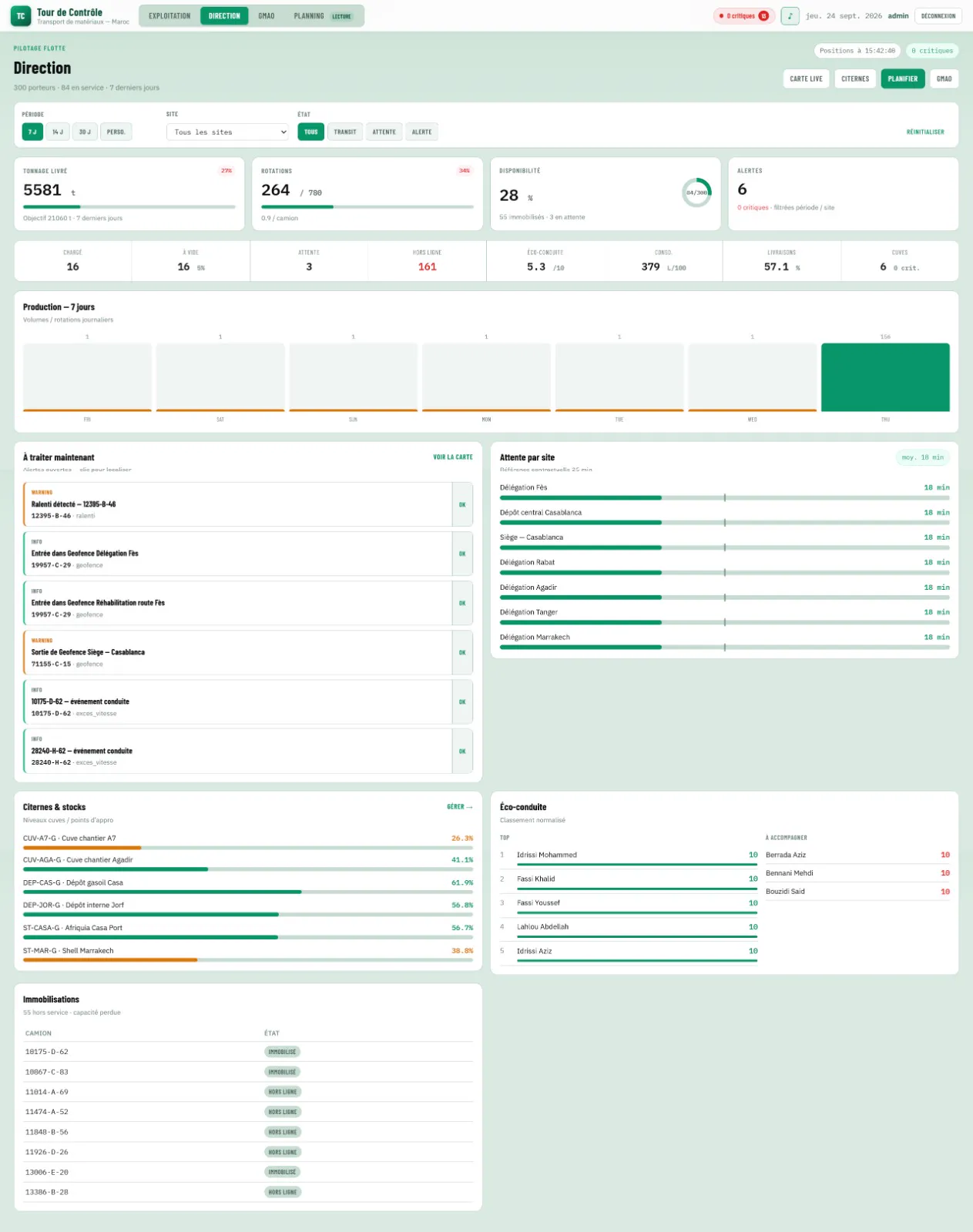
Management dashboard: tonnage delivered, rotations, fleet availability, 7-day production, alerts to handle, wait time per site, tank levels, eco-driving ranking and idle vehicles
Management dashboard
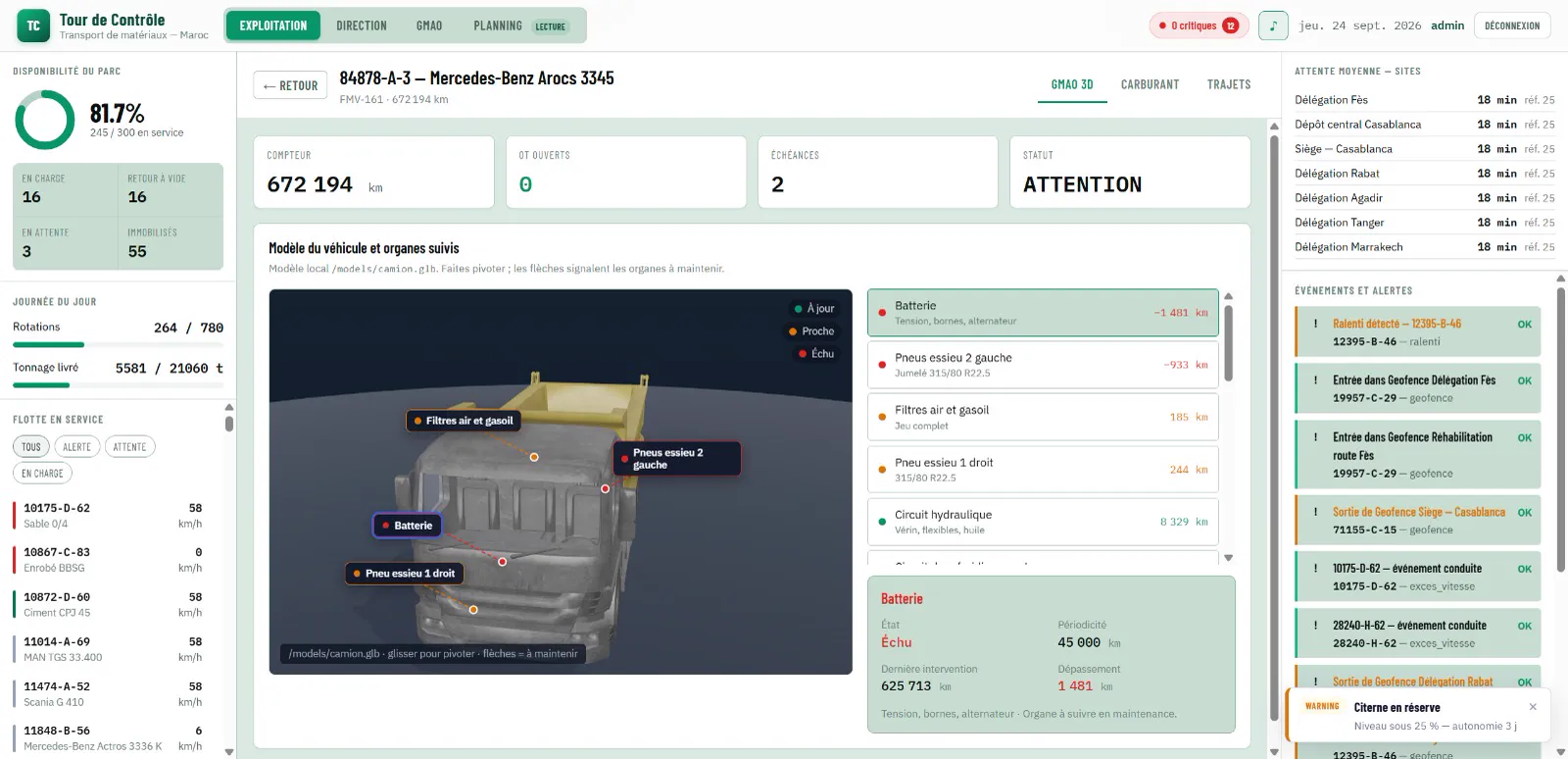
3D maintenance view of a truck: battery, tires, filters and hydraulic circuit flagged by remaining mileage before service
3D CMMS: parts due for maintenance
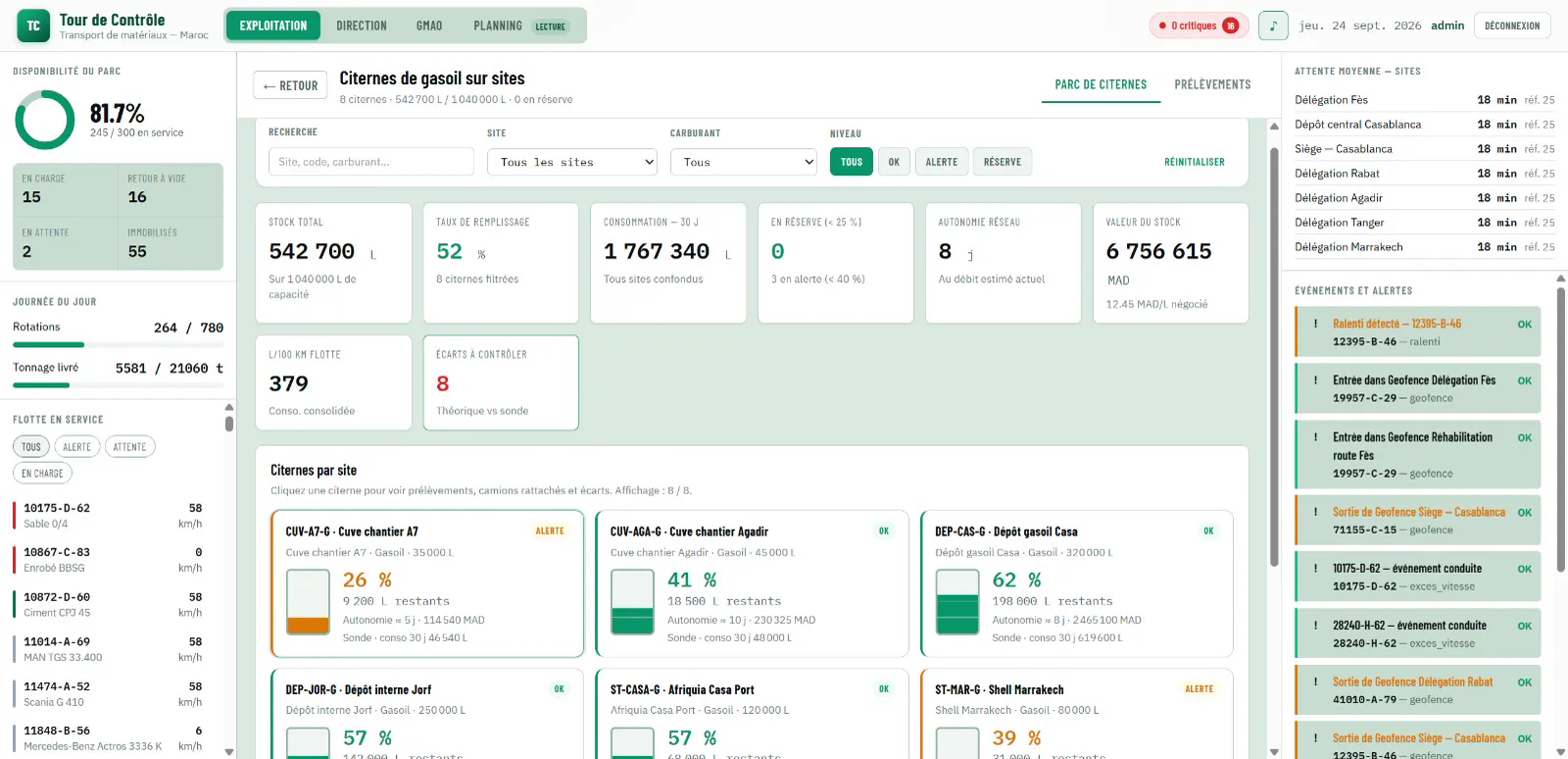
Diesel tank monitoring per site: total stock, fill rate, 30-day consumption, autonomy and gaps between theoretical consumption and sensor readings
Diesel tanks across sites
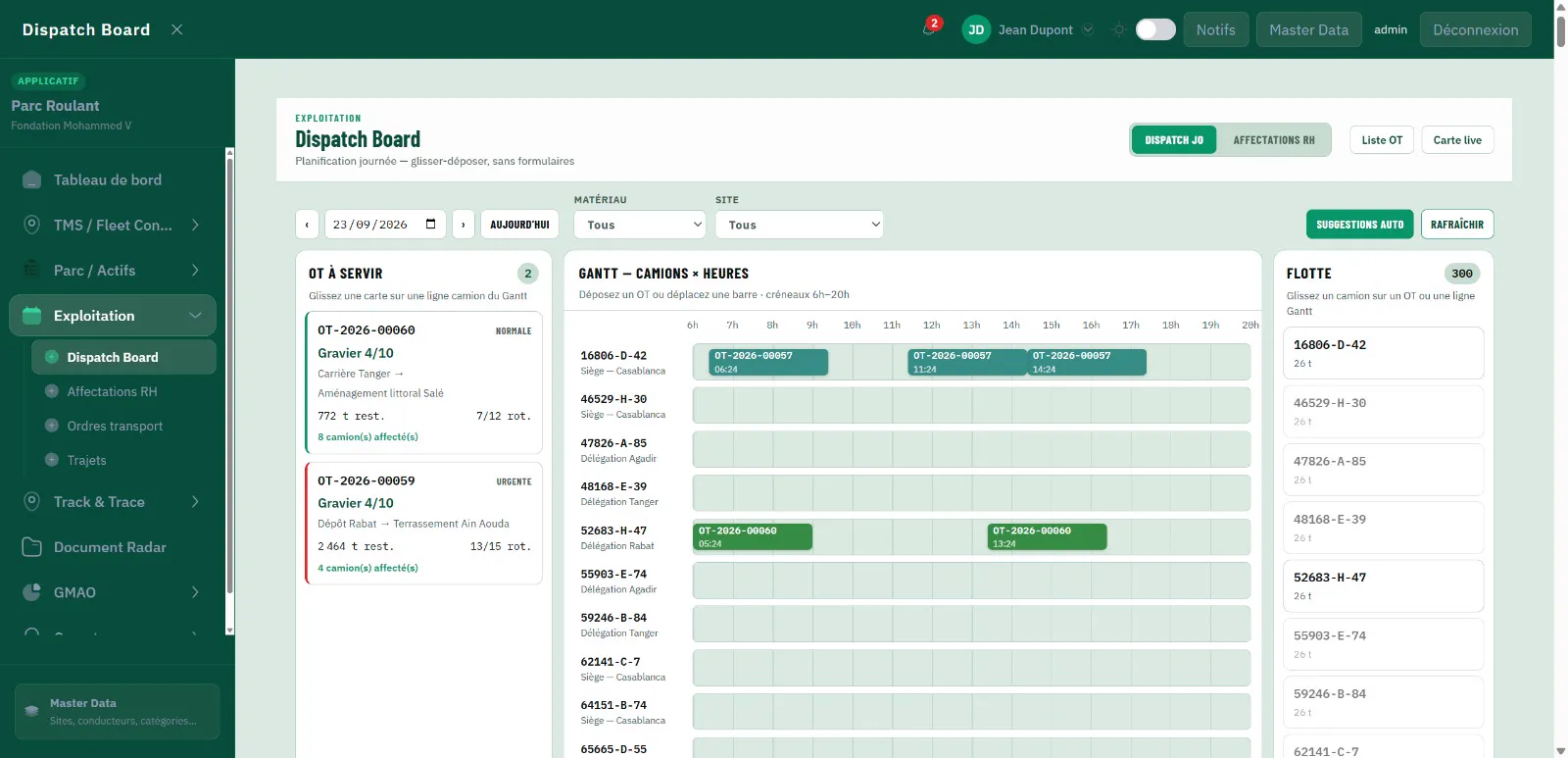
Dispatch board: transport orders to serve, hourly truck Gantt chart and available fleet, drag-and-drop assignment
Dispatch board: drag-and-drop planning
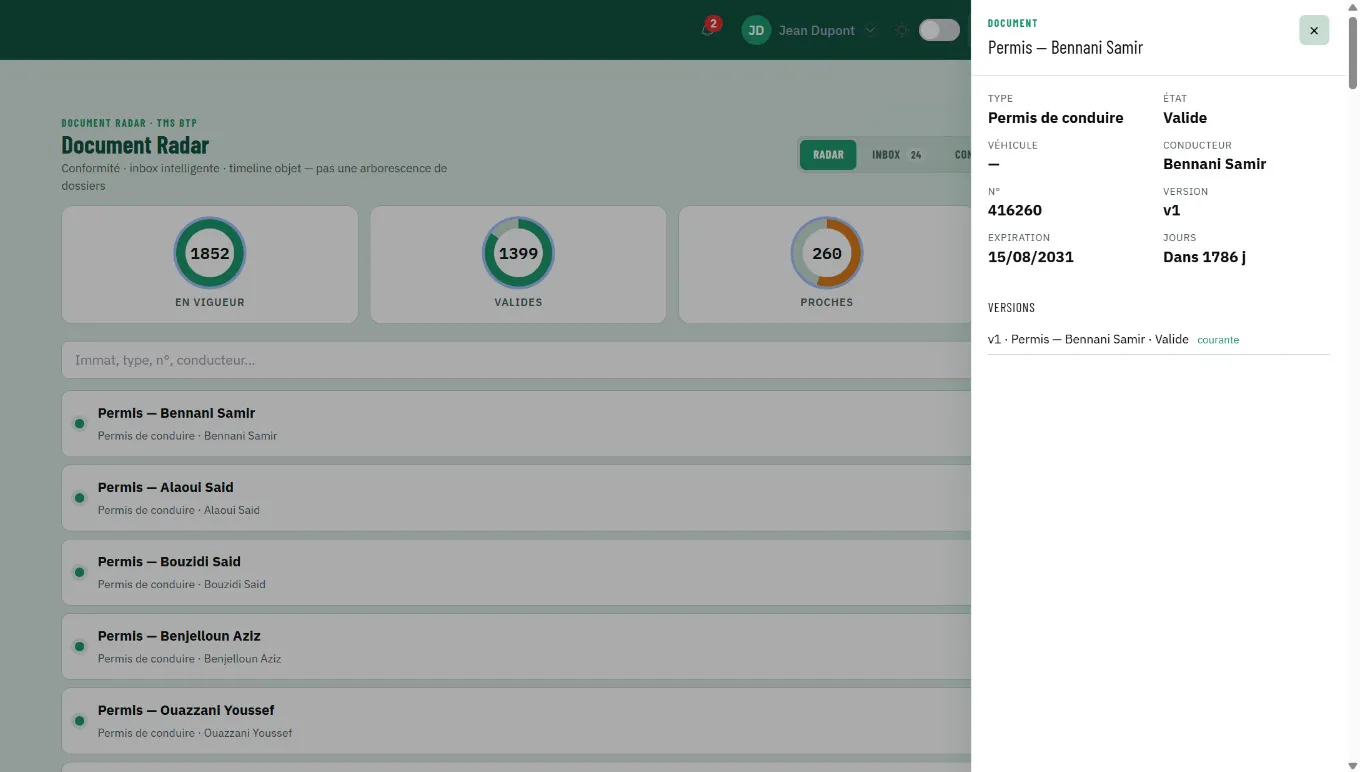
Document radar: compliance tracking for fleet licenses and documents, valid, expiring and expired, detailed sheet per driver
Document radar: driver compliance
01 / The 6 Systems

One control tower, six sources of truth.

WMS, TMS, IMS, AMS, IoT and AI don't replace one another — each feeds a specific piece of real-time steering. The control tower doesn't duplicate them, it extracts what triggers a decision.

The WMS drives the physical reality of the warehouse: receiving, locations, order picking, shipping, inventory counts. It's the source of truth on what's where, and what's left to do today.

In the control tower: In a control tower, the WMS doesn't report every pallet move — it feeds stock levels of critical SKUs, orders running late against their SLA, inventory discrepancies and the service rate per site.

Stock by critical SKUOrders late on pickingInventory discrepanciesService rate by site
See the WMS demo →
02 / Our Offer

Three tiers, from diagnosis to AI-assisted steering.

Control Tower Mini
From 135,000 MAD excl. VAT
4 to 6 weeks
3–5 key Power BI dashboards · OTIF, inventory, cash
Control Tower Pilot
From 330,000 MAD excl. VAT
2 to 3 months
8–12 dashboards + alerts + steering committee ritual
Control Tower Pro
From 840,000 MAD excl. VAT
4 to 6 months
Mid-cap · multi-site · AI/ML · executive mobile portal

Each tier includes selecting or integrating the necessary source systems (WMS, TMS, IMS, AMS, IoT), defining alert thresholds and training teams to run them.

03 / Training

Train the teams who will run the control tower.

04 / Advisory & Support

Scope it, integrate it, run it for the long term.

Frequently Asked Questions

Your questions, our answers.

A control tower is a command center that consolidates real-time data from your systems — WMS, TMS, inventory management, assets, IoT sensors — to detect deviations from plan, trigger alerts and prioritize decisions. It does not replace your software: it extracts what calls for action.

At Nextinotech, three tiers: Control Tower Mini from 135,000 MAD excl. VAT (4 to 6 weeks, 3 to 5 key dashboards), Control Tower Pilot from 330,000 MAD excl. VAT (2 to 3 months, 8 to 12 dashboards, alerts and steering committee ritual), Control Tower Pro from 840,000 MAD excl. VAT (4 to 6 months, multi-site, AI and executive mobile portal).

Those that trigger a decision: service rate and OTIF, stockouts and coverage of critical SKUs, late orders, delivery position and ETA, fleet availability and downtime, fuel consumption, cash tied up in inventory. Choosing the indicators and their thresholds is the first step of every tier.

Yes, provided you start small. The Mini tier covers 3 to 5 dashboards on the topics that cost the most (customer service, inventory, cash), using data you already have. You then expand the scope once the first alerts have proven their value.

Yes: the video and screenshots on this page show a transport control tower (real-time map, vehicle sheet, maintenance, tanks, planning), on fictitious data. The interactive WMS and TMS demos on the site show the source systems that feed it.

No. Nextinotech takes no vendor commission: we recommend and integrate whatever tools fit your context, whether Power BI dashboards, an off-the-shelf control tower platform, or custom development.

No, but it is the most efficient order. A control tower consumes data from your existing systems; without a WMS or TMS, it starts with a narrower scope (ERP, manual files), which limits the value of the first alerts. The Mini tier is designed to work even with still-basic source systems.

Integration technically connects your systems to one another. A control tower goes further: it adds alert thresholds, exception prioritization and the decision governance that turn that connected data into real-time steering.

The Mini tier (4 to 6 weeks) delivers an initial scope of 3 to 5 dashboards. The first visible return on investment, usually on transport costs, typically appears 3 to 6 months after the initial deployment ends.

No. A Mini or Pilot-level control tower runs on manually configured thresholds and alerts, without AI. AI (anomaly detection, automatic prioritization) is the most advanced maturity level, relevant once basic governance is stable.